
Gallery
All Pictures (3)Biography
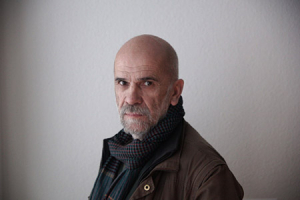
Johann Feindt was born on 16 March 1951 in Hamburg, Germany. After completing secondary school in 1970, he studied medicine in Berlin for several years and completed his clinical assistantship in the surgical and internal medicine departments of the Kreuzberg Urban Hospital, one of the city's major public hospitals. In 1976, he decided to change careers and was accepted into the Deutsche Film- und Fernsehakademie Berlin (DFFB), Germany's most prestigious film school.
While still a student, Feindt directed several feature-length documentaries. One of the most notable was "Unversöhnliche Erinnerungen" ("Irreconcilable Memories," 1979), co-directed with Karl Siebig and Klaus Volkenborn. The film tells the story of two Germans who fought on opposite sides of the Spanish Civil War, reflecting on memory, ideology, and political division. It won the Golden Dove and the FIPRESCI Prize at the Leipzig Documentary Film Week—at the time the most important documentary film festival in East Germany—and was also awarded Best Documentary by the German Film Critics Association.
For his graduation film "Der Versuch zu leben" ("The Attempt to Live," 1983), Feindt brought together his medical background and his cinematic work. The documentary observes daily life in the emergency room of the Urban Hospital, focusing not only on doctors and nurses but also on the patients' social backgrounds and the circumstances that led to their hospitalization. By doing so, the film addresses broader social issues such as loneliness, social marginalization, and the resulting illnesses, including alcoholism and depression. The film premiered at the International Film Festival Mannheim, where it received the Filmdukat award, and Feindt won a Silver Film Ribbon at the German Film Awards.
After graduating, Feindt established himself as both a director and a cinematographer. He was director of photography for documentaries such as "Die Kümmeltürkin geht" ("Melek Leaves," 1985) by Jeanine Meerapfel, a portrait of a young Turkish woman navigating life in Germany, and "Landunter?" (1988) by Rolf Schübel, which examines social change in rural communities. For his own documentary "Nachtjäger" (1988), Feindt followed photographers and reporters in Cologne as they searched for sensational stories in the city at night.
In 1990, Feindt co-directed "Im Glanze dieses Glückes" ("In the Splendour of Happiness") with Jeanine Meerapfel, Helga Reidemeister, Tamara Trampe, and Dieter Schumann. The film captures the emotional responses of ordinary citizens in the former East Germany during the political upheavals surrounding German reunification, showing both hope and disillusionment. It premiered at the San Sebastián International Film Festival.
Together with Tamara Trampe, Feindt directed "Der schwarze Kasten" ("The Black Box"), begun in 1990 and completed in 1992. In the film, they interview former university professor and secret police officer Jochen Girke about his role as a perpetrator within the East German surveillance system, deliberately avoiding simplistic moral judgments. In "Blockade" (1992), co-directed with Thomas Kufus, Feindt traveled to St. Petersburg to trace the history of the German siege of Leningrad during the Second World War. "Wundbrand - Sarajevo, 17 Tage im August" (1994), co-directed with Didi Danquart, documents everyday life in the besieged city of Sarajevo during the Bosnian War.
Feindt's experimental documentary "Mein Freund, der Minister" (1998), about the political engagement of Haitian filmmaker Raoul Peck, premiered at the Nyon International Documentary Film Festival in Switzerland. His television documentary "Reporter vermisst" (2003), which explores the dangers of war reporting and the disappearance of French photojournalist Gilles Caron in Cambodia in 1970, earned Feindt the prestigious Grimme Prize, Germany's highest award for television journalism.
A particularly significant part of Feindt's career consists of three major directing collaborations with Tamara Trampe. Their long-term documentary "Weiße Raben – Alptraum Tschetschenien" ("White Ravens – Nightmare in Chechnya," 2001–2005) focuses on Russian veterans of the Chechen wars who are portrayed as both perpetrators and victims. The film won another Grimme Prize and received the Libraries' Award at the Paris documentary festival Cinéma du Réel. "Wiegenlieder" ("Lullaby," 2010) is a poetic exploration of the role of lullabies in the lives of people from different cultural backgrounds in Berlin. "Meine Mutter, ein Krieg und ich" ("My Mother, a War and Me"), which premiered in the Panorama section of the Berlin International Film Festival in 2014, follows Trampe's search for her unknown father and tells the story of her mother, who gave birth during the winter of 1942 near the Volga River under extreme wartime conditions. The film received widespread critical acclaim and won the Heiner Carow Prize from the DEFA Foundation.
Although Feindt's own directing work has been exclusively documentary—and he always served as his own cinematographer—he has also worked extensively as a cinematographer on fiction films. His work ranges from the controversial documentary "Beruf Neonazi" ("Profession: Neo-Nazi," 1993) by Winfried Bonengel, to Didi Danquart's historical drama "Viehjud Levi" ("Jew-Boy Levi," 1999), and Andres Veiel's acclaimed documentary "Die Spielwütigen" ("Addicted to Acting," 2004), on which Feindt was one of several cinematographers. He continued his collaboration with Danquart on feature films such as the tragicomedy "Offset" (2006), the coming-of-age drama "Bittere Kirschen" ("The Path to the Past," 2011), and the television thriller "Goster" (2016), which combines live action and animation.
Feindt has also had a long and productive collaboration with director Andreas Kleinert. For his cinematography on Kleinert's television films "Kelly Bastian – Geschichte einer Hoffnung" (2001) and "Mein Vater" (2002), Feindt was nominated for the German Camera Award. Their further collaborations include the long-running German crime series "Tatort" and "Schimanski," the psychological drama "Freischwimmer" (2007), and several socially critical television films.
In parallel, Feindt has worked as cinematographer on internationally recognized theatrical documentaries, including "Wrong Elements" (2016) by Jonathan Littell, about former child soldiers from Uganda; "Cahier Africain" (2008–2016) by Heidi Specogna, an award-winning long-term investigation into sexual violence as a weapon of war in Central Africa and the trial of Jean-Pierre Bemba at the International Criminal Court; and "Schönheit & Vergänglichkeit" ("Beauty and Decay," 2019) by Annekatrin Hendel, about Berlin nightclub icon and photographer Sven Marquardt. With Jeanine Meerapfel, Feindt also shot "Eine Frau" ("A Woman," 2021), a documentary essay revisiting her early film "Malou" (1981).
He was behind the camera for "In den Uffizien" ("Inside the Uffizi," 2021), offering rare insight into the inner workings of Florence's world-famous art museum, as well as for a portrait of the internationally renowned pianist Igor Levit by Regina Schilling. "Igor Levit – No Fear" was released theatrically in 2022.
In November 2021, Andreas Kleinert's biographical feature film "Lieber Thomas" ("Dear Thomas"), about the writer, filmmaker, and political provocateur Thomas Brasch, was released in cinemas. At the 2022 German Film Awards, the film won nine Lolas, including Best Cinematography, awarded to Johann Feindt. Around the same time, in May 2022, Feindt premiered another collaboration with Heidi Specogna: "Stand Up My Beauty," a Swiss–German documentary about the Azmaris, itinerant poets and musicians from Ethiopia. One month later, the Munich-based "Tatort" crime drama "Flash," directed by Andreas Kleinert and shot by Feindt, was broadcast on German public television.
He also continued his collaboration with Andreas Kleinert as director, shooting the "Tatort" crime dramas "Borowski und der Wiedergänger" (2024) and "Das Verlangen" (2025). For the cinema, Feindt completed the documentary "Die Vision der Claudia Andujar" ("The Lady With The Arrows," DE/CH 2024), once again working with Heidi Specogna. The film portrays the life and work of photographer and human-rights activist Claudia Andujar.