
Gallery
All Pictures (2)Biography
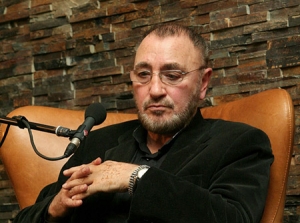
Jürgen Traugott Böttcher was born on July 8, 1931, in Frankenberg, Saxony, and grew up in Strahwalde in the Upper Lusatia region. From 1949 to 1953, he studied painting in the newly founded GDR at the Dresden Academy of Fine Arts. He then worked as an independent artist and taught courses at the Dresden adult education center, where his students included later well-known artists such as A. R. Penck and Peter Makolies.
In 1955, Böttcher began studying directing at the German Academy of Film Art in Potsdam, founded just a year earlier (later named University of Film and Television "Konrad Wolf," today Film University Babelsberg Konrad Wolf). His graduation film "Notwendige Lehrjahre" ("Necessary Years of Learning," 1960) immediately attracted attention for its sensitive, nonjudgmental portrayal of juvenile offenders in a youth reformatory in Thuringia.
After completing his studies, Böttcher joined the DEFA Studio for Newsreels and Documentary Films. His first DEFA production, the short documentary "Drei von vielen" ("Three of Many," 1961), drew on his experience as an art teacher to portray young factory workers – among them Penck and Makolies – who were interested in visual art and personal self-expression. This image clashed with the GDR's official ideal of the worker. The film was banned and not shown until 1988, when it premiered at the Edinburgh International Film Festival as part of a Böttcher retrospective.
That same year, 1961, Böttcher's painting was sharply criticized following a group exhibition at the Academy of Arts. During the ensuing "formalism debate," he was expelled from the Association of Visual Artists, effectively ending his professional prospects as a painter within the GDR system.
Despite this setback, Böttcher retained his position at DEFA and continued making short documentaries. Repeatedly, his films explored the lives of young people and the working conditions of ordinary laborers. "Ofenbauer" ("Furnace Makers," 1962), which documents the relocation of a 65-meter-tall, 2,000-ton blast furnace at the Eisenhüttenkombinat steelworks, received strong praise and international attention. "Stars" (1963) focused on women working on an assembly line at a Berlin lightbulb factory, while "Barfuß und ohne Hut" ("Barefoot and without a Hat," 1965) followed a group of teenagers on vacation at the Baltic Sea. Although the latter offered an unusually authentic picture of youth culture in mid-1960s East Germany, officials criticized it as insufficiently "representative." It was approved but received virtually no theatrical release. Less controversial was "Kindertheater" ("Children's Theater," 1965), in which Böttcher used his characteristic eye for detail to look behind the scenes of a children's theater.
A great admirer of Italian neorealism, Böttcher originally aspired to become a feature film director. Over the course of his career, however, he completed only one fiction film: "Jahrgang 45" ("Born in '45," 1966), about a young Berlin couple whose marriage is already falling apart after just two years. Influenced by cinéma vérité, the film has an almost documentary feel in its portrayal of everyday relationships and urban life, and – except for the lead roles – features mostly nonprofessional actors. During the rough-cut stage, however, Böttcher was forced to abandon the project. At the 11th Plenum of the SED Central Committee, the film was condemned as "nihilistic and skeptical." It was not reconstructed and shown until 1990, after the end of the GDR, when it premiered at the Berlinale's Forum section and received special mentions from both the FIPRESCI and Interfilm juries.
After this severe blow, Böttcher returned to the DEFA documentary studio. In the years that followed, he produced numerous short films for the Ministry of Foreign Affairs, including "Wir waren in Karl-Marx-Stadt" ("We Were in Karl-Marx-Stadt," 1967), about the Whitsun meeting and 8th parliament of the Free German Youth, and "Song International" (1971), documenting the second Festival of Political Song in Berlin. Alongside these assignments, he also realized more personal projects, such as "Der Sekretär" ("The Party Secretary," 1967), a portrait of an SED party secretary at the Buna chemical works, and "Erinnere dich mit Liebe und Hass!" (1974), about the political and social situation in Chile following the military coup of September 11, 1973.
In "Ein Weimarfilm" ("A Weimar Film," 1977), Böttcher portrayed Weimar both as a center of German cultural heritage and as the site of the Buchenwald concentration camp. "Martha" (1979), about Berlin's last remaining "rubble woman," was awarded the Prize of the Staff of the Oberhausen Short Film Festival.
Beginning in the mid-1970s, Böttcher also exhibited extensively as a visual artist under the pseudonym Strawalde, taken from the village where he grew up. In the early 1980s, his artwork became the subject of several experimental films, including "Pottes Stier" ("Potter's Bull"), "Venus nach Giorgione" ("Venus by Giorgione"), and "Frau am Klavichord" ("Woman at the Clavichord," all 1981) as part of the series "Verwandlungen" ("Transformations"). With "Kurzer Besuch bei Hermann Glöckner" ("Hermann Glöckner: A Short Visit," 1985), he created an intimate portrait of the then 96-year-old painter Hermann Glöckner.
The world of work remained a central theme throughout his filmmaking. "Rangierer" ("Shunters," 1984) depicts daily routines at the GDR's largest rail yard in Dresden-Friedrichstadt, while "Die Küche" ("The Kitchen," 1986) observes the demanding labor of kitchen workers at a major shipyard in Rostock. A key historical document is "Die Mauer" ("The Wall," 1990), which captures the atmosphere and many telling moments surrounding the fall of the Berlin Wall in 1989. The film received the FIPRESCI Prize at the Berlinale Forum in 1991 and a special mention at the European Film Awards in the same year.
After that, Böttcher – who remained employed by DEFA until 1991 – did not make another film for a decade. As an artist working under the name Strawalde, however, he stayed highly active, with numerous exhibitions across Europe and North America. Rooted stylistically in the tradition of classical modernism, his paintings in the early 1990s often addressed German reunification.
Böttcher received the German Film Award for Lifetime Achievement in 1992, was named an Officer of the French Order of Arts and Letters in 1994 and was awarded the Federal Cross of Merit (First Class) in 2001. With his distinctive and wide-ranging body of work, he is widely regarded as the most important documentary filmmaker in East Germany during the 1970s and 1980s, and his influence extends far beyond the former GDR. His films are now considered formative for an entire generation of East German filmmakers.
His most recent film to date, the experimental documentary "Konzert im Freien" ("A Place in Berlin," 2001), was completed in 2000. Using archival footage he had shot years earlier, Böttcher traces the creation of Berlin's Marx-Engels Forum, juxtaposing it with newly filmed material and setting the collage to free-jazz music. The film was screened at the Berlinale in 2001.
In 2006, Böttcher's life's work was honored with the Berlinale Camera, and in 2011 he received the honorary award of his alma mater, the University of Film and Television "Konrad Wolf." In 2021, Johannes Blume traced the artistic biography of Jürgen Böttcher in the documentary "Strawalde. Ein Leben in Bildern," using intimate conversations to explore why Böttcher never left the GDR despite political pressure and numerous restrictions, and why he never fully renounced it.
Jürgen Böttcher lives in Berlin.