
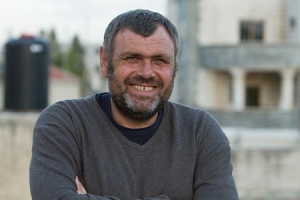
Biography
Michael Wiesweg was born on December 10, 1960, in Essen. After finishing high school, he attended Berlin's Fachschule für Fototechnik from 1981 to 1983. Subsequently, Wiesweg worked as an assistant camera operator for several film and TV productions. As Wiesweg has stated himself, cinematographer Jürgen Jürges became his main teacher during this period. Wiesweg collaborated with Jürges for "The Fog" (1988), "Die Tänzerin" ("The Dancer") and "Schatten der Wüste" (both 1989).
In 1990, Wiesweg made his debut as the director of photography in charge of Arend Agthe's film "Wunderjahre" ("Wonder Years") and filmed numerous film and TV productions from then on. He, for instance, was the director of photography for Thomas Arslan's films "Geschwister – Kardeşler" ("Brothers and Sisters", 1997), "Dealer"(1999), and "Der schöne Tag" ("A Fine Day", 2001). In 2004, he was the cinematographer for the award-winning films "Die syrische Braut" ("The Syrian Bride"), directed by Eran Riklis, and "Allein" ("Alone"), directed by Thomas Durchschlag.
Three years later, Wiesweg collaborated with Dominik Graf for the first time and won the 2008 German Camera Award for his composition of images for the historical drama "Das Gelübde" ("The Vow"). In 2008, he again worked as the main cinematographer for Graf's elaborate multi-part TV movie "Im Angesicht des Verbrechens" ("In Face of the Crime") that aired on TV in 2010. Wiesweg received the German Television Award and a Grimme Award for his cinematography. He continued to work with Graf on several occasions until 2018, including on the crime drama "Das unsichtbare Mädchen" (2011, TV), the historical film "Die geliebten Schwestern" ("Beloved Sisters", 2014), for which he was awarded the Bavarian Film Prize, and the character study "Hanne" (2018).
Wiesweg's best-known works also include the series "Weissensee" (2010–2018), the feature film "Mein Herz tanzt" ("Dancing Arabs", IL/DE/FR 2014), set in Israel, Sönke Wortmann's comedy "Sommerfest" ("A Summer Affair", 2016), and the crime series "München Mord" (2019–2023). His final work was the TV comedy "Pärchenabend" (2024).
Following a serious illness, Michael Wiesweg died on 15 March 2026 in Berlin.