
Gallery
All Pictures (56)Biography
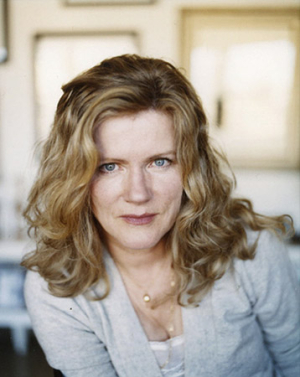
Barbara Sukowa, born February 2, 1950, in Bremen, studied acting at Berlin's Max-Reinhardt-Seminar and performed at several renowned German theatres. Simultaneously, Sukowa became an important movie and TV actress. In 1977, she starred in Rainer Werner Fassbinder's TV movie "Frauen in New York" ("Women in New York"). Sukowa made her breakthrough in front of the camera in the role of Mieze in Fassbinder's TV adaptation of "Berlin Alexanderplatz". She then played the title role of the small town prostitute "Lola" in Fassbinder's trilogy about the early years of the Federal Republic of Germany.
Sukowa then starred in Margarethe von Trotta's "Die bleierne Zeit" ("Marianne and Julianne"), for which she received the German Film Award in 1982, and won the Golden Palm at the 1986 Cannes film festival for her performance in von Trotta's "Rosa Luxemburg". For her portrayal of the socialist icon she also won her second German Film Award. In the following years, Sukowa continued to work with renowned directors. She starred, for instance, in Volker Schlöndorff's adaptation of Max Frisch's novel "Homo Faber" and in Lars von Trier's "Europa".
After several US productions Barbara Sukowa returned to Germany for a couple of movies. In 1998, she won the Bavarian film award for her performance as the depressive Anna Loeser in the TV production "Im Namen der Unschuld" ("In The Name of Innocence"). Furthermore, she played leading roles in Hans Steinbichler's "Hierankl" and in "Die andere Frau" ("The Other Woman"), again directed by Margarethe von Trotta.
After a highly-praised performance in Ulla Wagner's film "Die Entdeckung der Currywurst" ("the Invention of the Curried Sausage"), Sukowa again starred in a film directed by Margarethe von Trotta: In "Vision – Aus dem Leben der Hildegard von Bingen" ("Vision"), she plays the legendary mystic who became kind of an early icon of the women's movement in medieval times.
For her portrayal of the famous jewish German-American philosopher and journalist in von Trotta's "Hannah Arendt" (2012), Sukowa won the German Film Award for Best Female Actor – her third win after "Die Bleierne Zeit" and "Rosa Luxemburg".
In 2015, she reunited with Margarethe von Trotta for the family drama "Die abhandene Welt" ("The Misplaced World") and joined the cast of the US Sci-Fi series "Twelve Monkeys". She next starred opposite Josef Hader in "Vor der Morgenröte". Directed by Maria Schrader, the film chronicles writer Stefan Zweig's life in exile. Her portrayal of Zweig's first wife garnered Sukowa a German Film award nomination for Best Supporting Female Actor. Even before the film's release in June 2016, she was again nominated for the German Film Award for this role.
She had international supporting roles in the Hollywood action film "Atomic Blonde" (2017, as a German forensic pathologist) with Charlize Theron, in the Chilean-American romantic comedy "Gloria Bell" (2018, as a colleague of Julianne Moore's title character) and in the social drama "Native Son" (US 2019, as an Irish immigrant in Chicago). In the German children's film "Rocca verändert die Welt" (2019), she plays the grandmother of the young title character.
Sukowa played a major role in "Two of Us" ("Deux", FR/LU/BE 2019), about two seniors and neighbors (Sukowa and Martine Chevallier) who have kept their lesbian relationship a secret for years. The film received excellent reviews and won several awards; Sukowa won Best Actress at the Dublin Film Critics Awards and at the Prix Lumières in France (here together with Chevallier and as the first German actress) and was also nominated for the prestigious César in this category.
More light-hearted material was the comedy "Enkel für Anfänger" ("Granny Nanny", 2020) with Maren Kroymann and Heiner Lauterbach, followed by a guest role in the U.S. series "Hunters" (2020) with Al Pacino. Other international productions include the biopic "Daliland" (US 2021, German release 2023) in which Sukowa plays Gala Dali alongside Ben Kingsley, and the thriller series "Der Schwarm" ("The Swarm", US/DE 2022), based on the bestseller by Frank Schätzing.
Also in 2023, she reprised her role as the “rent-a-granny” Philippa in the sequel to "Enkel für Anfänger," titled "Enkel für Fortgeschrittene." In 2024, she was part of the core cast of the eight-part science fiction series "Constellation" (US/DE/FR) as an aerospace specialist. She also appeared in a leading role as an EU minister in Angelina Maccarone’s political drama "Klandestin" (2024).
Earlier, at the 2023 Munich Film Festival, Sukowa had been honored with the CineMerit Award; in May 2025, she also received the Honorary Award at the 34th Filmkunstfest Mecklenburg-Vorpommern.